
The Invisible Victims of Conflict: Pets, Livestock and Stray Animals


Many animals in Ukraine are trapped in a devastating situation, facing not only extreme weather conditions during both summer and winter, but also the ongoing consequences of the war. Explosions are deeply traumatic for both pets and stray animals.
The population of stray animals has increased significantly since the beginning of Russia's full-scale invasion of Ukraine in 2022. Many pets ran away during evacuations, terrified by the shelling. Others were left behind as people fled to save their own lives. Soldiers continue to rescue animals from the front line and bring them to shelters that are already overwhelmed and struggling to cope with the growing number of strays. At the same time, there is very little government support to reduce the stray animal population or to control the spread of rabies. Too often, animals become the invisible victims of war because people are understandably focused on surviving themselves.
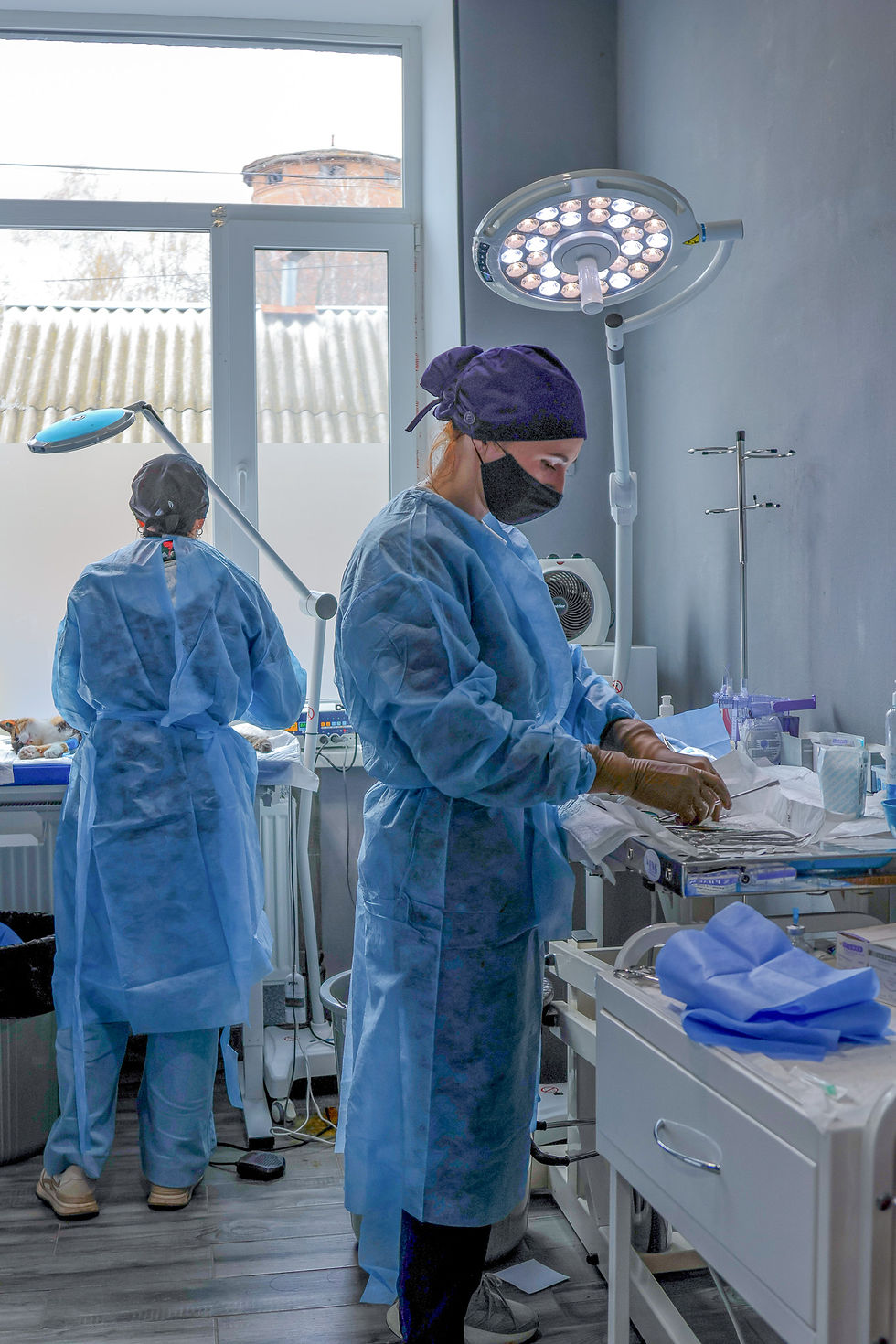
Last winter the temperature outside dropped as low as -22°C, while inside our clinic it was only around +6°C. Frequent power outages made it extremely difficult to keep the building warm, but we continued our work regardless. We even managed to run our "Donate a Day 2026" mission on 24 February 2026, sterilising and vaccinating 488 animals against rabies in one day, working alongside colleagues from both Ukraine and abroad.
Today, temperatures in Ukraine are above 30°C. It almost feels surreal that we managed to continue working through the freezing winter, but now we face a completely different challenge: extreme heat. This is the reality of working in Ukraine. And, of course, there are still the bombs. Summer brings its own difficulties. Just two days ago, I drove for 40 minutes with 20 cats in the back of a truck with the air conditioning running because it was simply too hot to transport them safely in the boot of a car. Every day brings a new challenge.

During the winter, a local volunteer brought us a cat that had been found outside with a prolapsed rectum. His intestines had frozen to a metal pipe. After hours of intensive care and emergency surgery, this little fighter survived. Another life saved.
One story that will always stay with me came from an elderly Ukrainian woman. She told me, "Both of my sons are on the front line right now. They rescued a husky and three cats from the war zone, and now I have to look after them. They simply couldn't leave them behind."
Another woman brought us a sweet little puppy she had rescued from a shelter. The puppy couldn't use her back legs, and she asked whether we had a wheelchair that might fit.
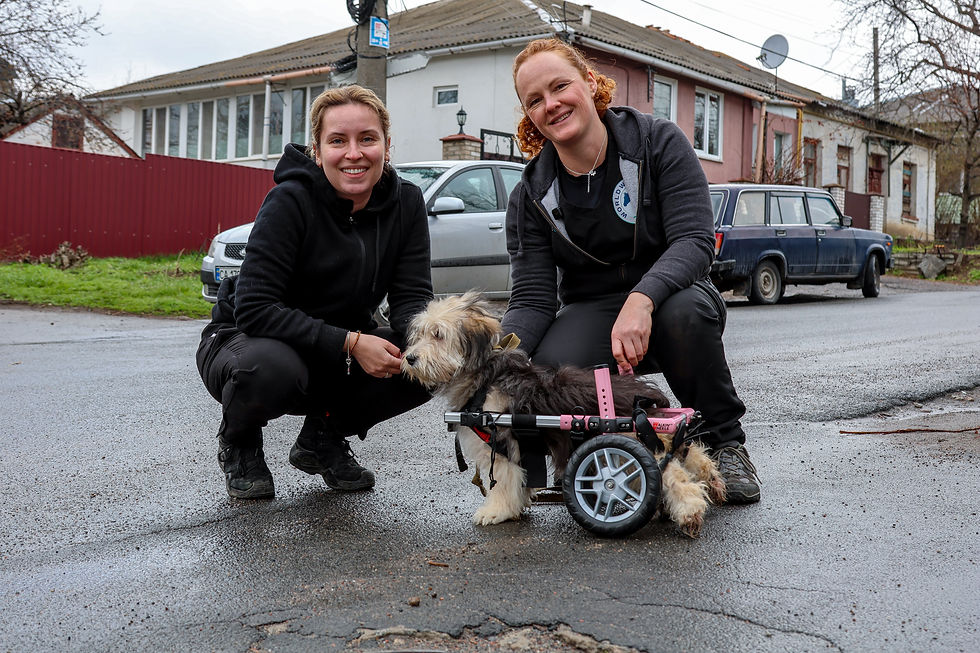
Thankfully, we had exactly the right size. Seeing that little dog happily zooming around in her new wheels reminded us why we continue this work, despite all the challenges.
But cats and dogs are not the only animals suffering in Ukraine. This spring, our team visited a sanctuary that rescues horses from temporarily occupied territories. While we cannot change everything these animals have been through, we are grateful that we can at least support their recovery by providing deworming treatment.
Written by Lisa Konovalova
Want learn more about our Operation Ukraine?
Visit Operation Ukraine to see how your support is helping provide lifesaving veterinary care to animals affected by the war. Every donation helps us deliver emergency treatment, supplies, and ongoing care to the animals and communities that need it most. Together, we can continue making a difference. Donate today and help keep our teams on the ground saving lives.


Comments